Everything You Need to Know About RuView AI WiFi Sensing
An in-depth architectural guide to building camera-free WiFi radar systems with ESP32 microcontrollers and edge neural networks.
Table of Contents
Quick navigation index for researchers, developers & SEO search engines
What is RuView?
Introduction
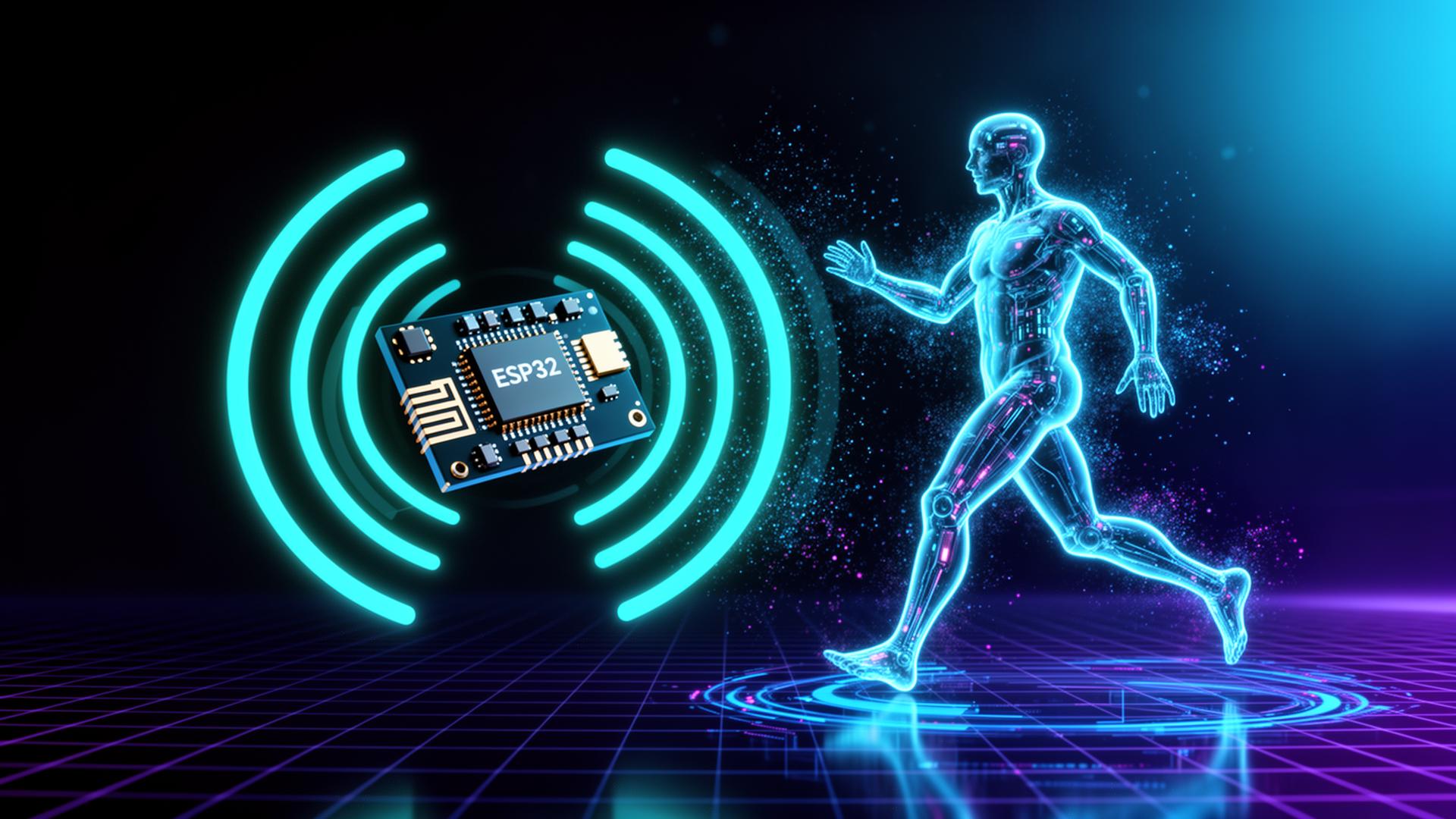
Imagine a world where your living space understands your presence, senses your subtle body movements, and even tracks your breathing rate through solid walls — without installing a single lens or camera. That is the revolutionary reality brought to life by RuView. RuView is an open-source, edge-native AI WiFi sensing platform designed to transform standard commercial microcontrollers into long-range spatial radar arrays.
Traditional smart home systems rely heavily on optical sensors or physical motion detectors. Optical cameras raise severe privacy concerns, while legacy Passive Infrared (PIR) sensors struggle to detect stationary humans who are simply reading or sleeping. RuView fundamentally solves both challenges by converting ambient high-frequency radio waves into detailed environmental telemetric data.
Overview
At its technical core, RuView taps into standard IEEE 802.11 WiFi transmissions. As radio signals bounce off interior walls, furniture, and human bodies, their phase and amplitude shift in tiny, predictable ways. RuView captures these high-resolution Channel State Information (CSI) subcarrier packets at microsecond intervals.
The captured raw radio signal stream is continuously fed into lightweight Rust signal engines and neural networks. These models filter out environmental RF noise, isolate Doppler frequency shifts caused by physical human motion, and output instant presence, activity, and vital sign metrics across your local network.
Main Purpose
The primary mission of RuView is to democratize high-precision spatial sensing while safeguarding absolute human privacy. RuView allows homeowners, researchers, and developers to deploy zero-camera monitoring solutions for residential security, eldercare fall detection, occupancy-aware climate control, and smart building automation.
Because all signal processing occurs strictly on your local network or hardware gateway, zero private telemetry or media is ever transmitted to remote cloud servers. You retain 100% data sovereignty while enjoying industrial-grade sensing capability built on commodity hardware.
Who Created RuView?
RuView was designed, engineered, and open-sourced by a global community of radio frequency engineers, machine learning researchers, and privacy advocates. Fueled by recent breakthroughs in ESP32 CSI firmware access and lightweight Rust signal processing, the team built RuView to provide an accessible alternative to proprietary enterprise radar systems.
Today, RuView remains strictly open source under the permissive MIT license, encouraging global research collaboration, home automation integration, and custom commercial deployments without restrictive licencing barriers.
RuView at a Glance
Below is a high-level summary of the architectural specifications and repository details behind the RuView framework.
Key Features of RuView
Utilizes 802.11 b/g/n/ax WiFi subcarriers to construct real-time 3D spatial disturbance fields without active optical emitters.
Continuously learns ambient room baseline noise to dynamically adjust detection thresholds in changing RF environments.
Detects micro-movements, chest wall expansion during breathing, and subtle limb repositioning while a human is completely stationary.
Eliminates the "sleep false negative" common in legacy PIR sensors, ensuring room state remains occupied during sleep or work.
Extracts up to 64 individual subcarriers per WiFi packet, reading phase shift ($\Delta \Phi$) and amplitude attenuation ($\Delta A$).
Processes thousands of incoming CSI packet matrices per second through high-throughput Rust FFT and PCA pipelines.
No photos, no video feeds, and no microphones. Absolute privacy guaranteed for bedrooms, bathrooms, and confidential facilities.
Zero cloud telemetry requirements. All signal matrices remain strictly within your local encrypted network boundary.
2.4 GHz and 5 GHz radio frequencies penetrate drywall, glass, wood doors, and interior partitions effortlessly.
Enables single-node coverage across adjacent rooms without placing physical hardware inside every room.
Connect multiple ESP32 receiver nodes back to a centralized gateway engine for multi-angle spatial triangulation.
Fuses CSI telemetry from multiple angles to create detailed room occupancy heatmaps and direction-of-travel vectors.
How RuView Works: The Technical Pipeline
WiFi CSI Explained
When a WiFi router sends a data packet to your smartphone or ESP32 board, the signal does not travel in a straight beam. Instead, it spreads out like water waves, bouncing off walls, ceilings, furniture, and human tissue before arriving at the receiver antenna.
Channel State Information (CSI) is a matrix of complex numbers produced by the physical layer (PHY) of the receiver chip. It describes exactly how each individual subcarrier frequency in the WiFi channel was scattered, attenuated, and delayed during transit.
Signal Collection & CSI Processing
Custom open-source firmware flashed onto an ESP32 board intercepts these raw PHY subcarrier frames. The board streams the raw binary CSI payloads over high-speed UDP or USB serial to the RuView Rust gateway.
The Rust engine applies low-pass Butterworth filtering, phase unwrapping, and Principal Component Analysis (PCA) to extract environmental disturbance features from raw noise.
AI Inference & Motion Detection Pipeline
Denoised subcarrier feature vectors are passed into compact neural models (Convolutional 1D / LSTM networks). These models evaluate time-series doppler signatures to classify specific human activities — such as walking, sitting, falling, or breathing.
Finally, the engine broadcasts structured JSON event payloads over WebSocket and MQTT, making it instant to trigger smart home automations in Home Assistant or custom security dashboards.
Supported ESP32 Hardware Boards
RuView runs on widely available commercial ESP32 microcontrollers. Below is the detailed hardware comparison matrix along with direct purchase links.
| Board Model | WiFi Frequency | Memory (Flash / PSRAM) | CSI Precision | Recommended For | Buy Link |
|---|---|---|---|---|---|
| ESP32-S3-DevKitC-1Recommended | 2.4 GHz (802.11 b/g/n) | 32MB Flash / 16MB PSRAM | Excellent (64 Subcarriers) | Primary default sensing node | Buy Amazon |
| ESP32-C5 Dual-Band5GHz Dual | 2.4 GHz / 5 GHz (WiFi 6) | 8MB Flash / 4MB PSRAM | Excellent (Low Noise 5GHz) | Multi-room 5GHz dense mesh | Buy Amazon |
| ESP32 Classic (WROOM-32) | 2.4 GHz (802.11 b/g/n) | 4MB Flash / No PSRAM | Good (52 Subcarriers) | Budget experiments & single room | Buy Amazon |
| ESP32-C3 (MINI-1) | 2.4 GHz (RISC-V) | 4MB Flash / No PSRAM | Limited (52 Subcarriers) | Compact low-cost edge-of-spec | Buy Amazon |
System Requirements
Windows 10/11 (64-bit), Ubuntu 20.04+, Debian 11+, macOS Sonoma+, or Raspberry Pi OS (64-bit).
Supports zero-dependency Docker deployments using the official `ruview/gateway:latest` container.
Rust toolchain (1.75+) for high-speed signal processing; Python 3.10+ for model training scripts.
Step-by-Step Installation Process
- 1Clone the Official RepositoryExecute
git clone https://github.com/ruview/ruview-ai-radar.gitto pull the latest engine firmware. - 2Install Core DependenciesInstall the Rust toolchain (cargo) along with USB serial drivers (CP2102/CH340) for your host platform.
- 3Flash ESP32 CSI FirmwareConnect your ESP32 board over USB-C and flash the pre-compiled CSI capture firmware using esptool.
- 4Launch Gateway & DashboardRun
cargo run --releaseor launch via Docker to access the web dashboard athttp://localhost:5173.
RuView vs Alternative Sensing Technologies
RuView vs Traditional Optical Cameras
| Feature | RuView WiFi Sensing | Optical Security Cameras |
|---|---|---|
| Privacy Safety | 100% Lensless & Privacy Safe | High visual privacy intrusion risk |
| Through-Wall Penetration | Yes (Works through drywall/wood) | No (Blocked by solid obstacles) |
| Darkness / Night Performance | 100% Unaffected by light levels | Requires IR emitters or bright light |
| Bandwidth Usage | <50 kB/s (Tiny telemetry payload) | High (Multiple Mbps video streams) |
RuView vs ESPresense (BLE)
ESPresense requires humans to carry active Bluetooth beacons or smartphones. RuView senses human tissue directly via WiFi CSI without carrying any devices or wearables.
RuView vs mmWave Radar
mmWave radar modules (e.g., LD2410) have narrow field-of-view cones and require line-of-sight. RuView covers whole multi-room spaces through walls using standard WiFi hardware.
RuView vs PIR Motion Sensors
PIR sensors only trigger on rapid thermal motion and freeze when you sit still. RuView tracks subtle respiratory chest motions to maintain continuous presence.
RuView vs UWB Tracking
Ultra-Wideband (UWB) chips are expensive and proprietary. RuView relies on ubiquitous $3–$8 commodity ESP32 microcontrollers.
RuView Advantages
- Zero ongoing subscription or cloud software fees.
- Runs on low-cost commodity ESP32 hardware boards.
- 100% camera-free, guaranteeing complete personal privacy.
- Senses through interior walls and furniture partitions.
- Integrates seamlessly into Home Assistant via MQTT.
Known Limitations
- Requires basic familiarity with flashing ESP32 microcontrollers.
- Large pets (e.g. heavy dogs) may trigger presence events.
- Dense reinforced concrete walls reduce 5GHz penetration depth.
- Requires stable 2.4/5GHz local WiFi environment.
Best Accessories for RuView Setup
Built in the Open on GitHub
RuView is fully open-source. Browse the Rust engine, ESP32 firmware, AI model definitions, and example dashboards on GitHub.
Grounded in Research, Ready for Production
WiFi Sensing Research
Decades of academic work on CSI, multipath fading and human RF signatures inform RuView's pipeline.
AI Radar Technology
Combines classic radar techniques (Doppler, MUSIC) with modern neural models for robust detection.
ESP32 CSI Development
First-class support for ESP32-S3 and ESP32-C5 CSI workflows, plus reference dashboards.
Frequently Asked Questions
Clear answers to common questions about RuView, WiFi CSI sensing, and privacy-first radar setups.