What is RuView? The Open-Source AI WiFi Sensing System
An in-depth, long-form exploration of RuView: the revolutionary open-source platform that turns cheap ESP32 chips into camera-free AI human detection radars.
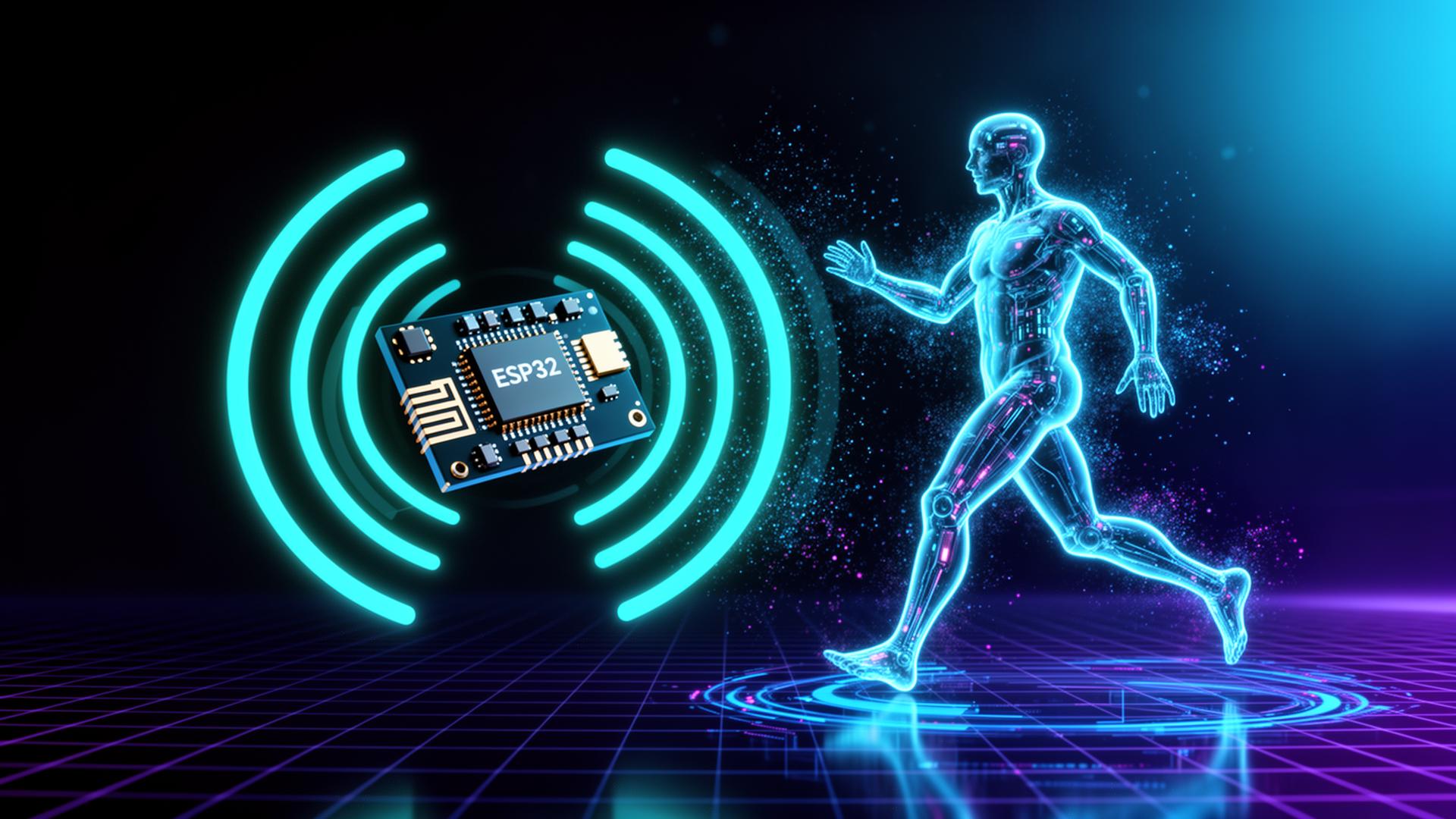
Introduction to WiFi Sensing and the RuView Philosophy

In the modern era of smart homes, building automation, and ambient intelligence, the demand for reliable human presence detection has never been higher. Traditionally, developers and engineers have relied on passive infrared (PIR) sensors, ultrasonic sensors, or camera-based computer vision systems. While PIR sensors are cheap, they fail when a person remains still. Computer vision systems are incredibly powerful, but they bring massive privacy concerns, high computational overhead, and legal liabilities, especially in private spaces like bathrooms, bedrooms, and clinical environments.
This is where **RuView** enters the picture. RuView is a pioneering, open-source AI WiFi sensing and human detection system. By using Channel State Information (CSI) extracted from commodity ESP32 microcontrollers, RuView turns standard radio frequency (RF) signals into a high-precision, camera-free human detection radar. It leverages edge neural network models to identify human movements, posture, presence, and even vital signs, providing a privacy-friendly alternative to invasive camera surveillance.
By reading the physical perturbations that human bodies introduce into electromagnetic fields, RuView provides a rich event-driven sensing layer that integrates seamlessly into modern home automation platforms like Home Assistant, or custom industrial gateways via MQTT and WebSockets.
The Science of Channel State Information (CSI)
To understand how RuView functions, it is essential to understand what Channel State Information (CSI) is. In standard wireless communications, data is transmitted over the air using Orthogonal Frequency Division Multiplexing (OFDM). In OFDM, the wireless channel is divided into multiple subcarriers (frequencies). When a signal travels from a transmitter (TX) to a receiver (RX), it does not travel along a single line. Instead, it reflects off walls, bounces off furniture, diffracts around corners, and penetrates obstacles. This phenomenon is known as multipath propagation.
As these reflected signals arrive at the receiver, they interfere with each other, causing phase shifts and amplitude attenuation. CSI is a collection of complex numbers that describe how each individual subcarrier was affected by the environment. Unlike Received Signal Strength Indication (RSSI), which only gives a single raw value representing the total signal strength, CSI provides a high-resolution, multi-dimensional matrix of the environment's RF fingerprint.
When a human body enters this multipath environment, it acts as a dynamic reflector. Because our bodies are composed of over 70% water, we absorb and scatter 2.4 GHz and 5 GHz radio waves. As a person walks, sits down, or even breathes, their movement changes the path lengths of the reflected signals. By analyzing these tiny changes in CSI across dozens of subcarriers over time, RuView's signal processing pipeline can reconstruct human presence and motion with incredible accuracy.
For a deep dive into the mathematical models of multipath propagation, phase calibration, and signal processing pipelines, read our detailed article on How WiFi CSI Sensing Works.
Hardware Democratization: Utilizing Cheap ESP32 Nodes

Historically, research into WiFi sensing was confined to academic labs using expensive software-defined radios (SDRs) or specialized industrial network interface cards (like the Intel 5300 or Atheros AR9300). These setups cost thousands of dollars and required bulky computers.
RuView democratizes this technology by supporting consumer-grade microcontrollers, specifically the **ESP32 series** by Espressif Systems. These chips cost less than $5, consume minimal power, and feature built-in Wi-Fi radios. The Espressif ESP-IDF framework allows developers to capture raw CSI packets in real-time, making it the perfect platform for distributed edge sensing.
RuView has dedicated firmware optimized for the **ESP32-S3** and the newer **ESP32-C5** (which adds 5 GHz support). While classic ESP32 chips work well for basic motion detection, the ESP32-S3 provides higher memory bandwidth and hardware-accelerated vector instructions, making on-device signal filtering possible.
If you are ready to start choosing your hardware components, check out our comprehensive guide on the Best ESP32 Boards for CSI Projects or refer to our official Hardware Reference Setup.
The RuView Software and Signal Processing Pipeline
Raw CSI data is extremely noisy. High-frequency electrical noise, ambient temperature fluctuations, and carrier frequency offsets (CFO) between the transmitter and receiver can distort the signal, making it difficult to distinguish a human heartbeat from standard background noise.
To address this, RuView implements a multi-stage signal processing pipeline written entirely in Rust. Rust was chosen for its zero-cost abstractions, memory safety, and C-like performance, which is vital for real-time edge processing. The pipeline consists of the following steps:
- **Denoising and Filtering**: High-pass and band-pass Butterworth filters remove ambient static reflections and electrical noise, leaving only dynamic, human-induced frequency shifts.
- **Phase Calibration**: CSI phase measurements are notoriously unstable due to unsynchronized clocks. RuView utilizes a linear regression-based phase unwrapping and sanitization algorithm to extract clean phase information.
- **Dimensionality Reduction (PCA)**: Raw CSI contains data for up to 64 subcarriers per packet. RuView uses Principal Component Analysis (PCA) to extract the most dominant components, reducing the computational load for the downstream neural network.
- **Neural Inference**: The processed time-series tensors are fed into lightweight convolutional neural networks (CNN) and long short-term memory (LSTM) models that classify the motion (e.g., walking, sitting, falling, breathing).
Once inference is complete, the engine transmits clean JSON events over WebSockets or MQTT to smart home hubs or custom industrial dashboards.
Real-World Applications and the Privacy Revolution

The applications of RuView are vast and cross multiple industries:
- **Elderly Care and Fall Detection**: Falls are a leading cause of injury among the elderly. Placing cameras in bedrooms or bathrooms is highly invasive, and wearables are often forgotten or refused. RuView can detect falls through walls in complete darkness, sending emergency alerts instantly without violating privacy.
- **Smart Home Automation**: Current smart homes rely on PIR sensors that turn lights off if you sit still reading a book. Because RuView can detect chest expansions from breathing, it knows you are in the room even if you are completely motionless.
- **Energy Management**: Offices and commercial buildings can dynamically adjust HVAC and lighting zones based on exact human counts and occupancy maps, saving thousands in energy costs.
By designing a system that focuses entirely on RF signals and operates locally at the edge, RuView represents a major step forward in the privacy-friendly AI revolution. We invite you to clone the code, flash your first ESP32, and join our growing community of developers on GitHub.
FAQ
Is RuView real?
Yes — RuView is an open-source project on GitHub focused on WiFi CSI sensing and AI human detection.
Do I need cameras?
No. RuView is camera-free and microphone-free; it senses through radio waves only.
What is the detection range?
Typically up to 10-15 meters depending on wall thickness, layout, and antenna configurations.
Explore RuView on GitHub
Browse the Rust engine, ESP32 firmware and examples.